What is a Human Energy Field?
Every human body generates an electromagnetic field strong enough to power a small LED light bulb. This invisible energy field, extending beyond our physical bodies, has fascinated scientists and researchers for decades. The human energy field encompasses various forms of measurable energy emissions, including electromagnetic radiation, infrared heat, and biophoton emissions. Modern science continues to uncover new aspects of these fields, their role in biological processes, and potential applications in health and medicine. This comprehensive guide explores the scientific evidence, measurement methods, and biological implications of human energy fields.
Understanding Human Energy Fields
The concept of a human energy field (HEF) represents a complex dynamic system of electromagnetic and subtle energies that extends beyond the physical boundaries of the body. This field serves as a fundamental organizing force that maintains biological homeodynamics and supports vital life processes.
The human energy field possesses several distinct characteristics:
- Continuous and dynamic nature with unique patterns
- Extends beyond physical body boundaries
- Exhibits measurable electromagnetic properties
- Demonstrates rhythm, symmetry, and flow patterns
- Interacts with environmental energy fields
Definition and Basic Concepts
The human energy field is defined as a luminous field that comprises and surrounds a person, maintaining a continuous mutual process with environmental energy fields. This vital energy system operates at multiple frequencies and demonstrates both electromagnetic and subtle energy properties. Traditional medical systems recognized this field under various names – qi in Chinese medicine, prana in Ayurvedic practice, and biofield in contemporary scientific terminology.
Historical Scientific Research
Scientific investigation of human energy fields began systematically in the 1930s. Dr. Harold Burr, between 1938 and 1970, published 90 papers documenting what he termed “Life Fields.” His research demonstrated that these fields serve as electromagnetic molds for physical cells, providing patterns for growth and development. Notably, Burr’s work revealed that changes in the Life Field often preceded physical manifestations of disease.
Modern Scientific Perspectives
| Traditional View | Modern Scientific Understanding |
|---|---|
| Vital force | Complex electromagnetic field |
| Energy centers (chakras) | Biofield detection points |
| Energy meridians | Electromagnetic pathways |
| Healing energy | Measurable field interactions |
Contemporary research has validated many historical observations through advanced measurement technologies. Scientists now recognize the human energy field as a complex dynamic of electromagnetic fields that include oscillating electrically charged particles, biophotons, and molecules creating standing waves. These fields demonstrate frequencies up to 1000 times higher than typical nerve and muscle electrical signals.
Modern studies have established that disturbances in energy field coherence patterns often indicate disease and aging processes. This understanding has led to the development of various biofield detection technologies and therapeutic applications. The field’s electromagnetic properties have been investigated in scientific laboratories using sophisticated photometers and color filters, providing empirical evidence for its existence and characteristics.
Scientific Evidence and Measurement
Modern scientific instruments have revolutionized our ability to detect and measure the subtle energies emanating from the human body. These technological advances provide empirical evidence for the existence and characteristics of human energy fields.
Biofield Detection Technologies
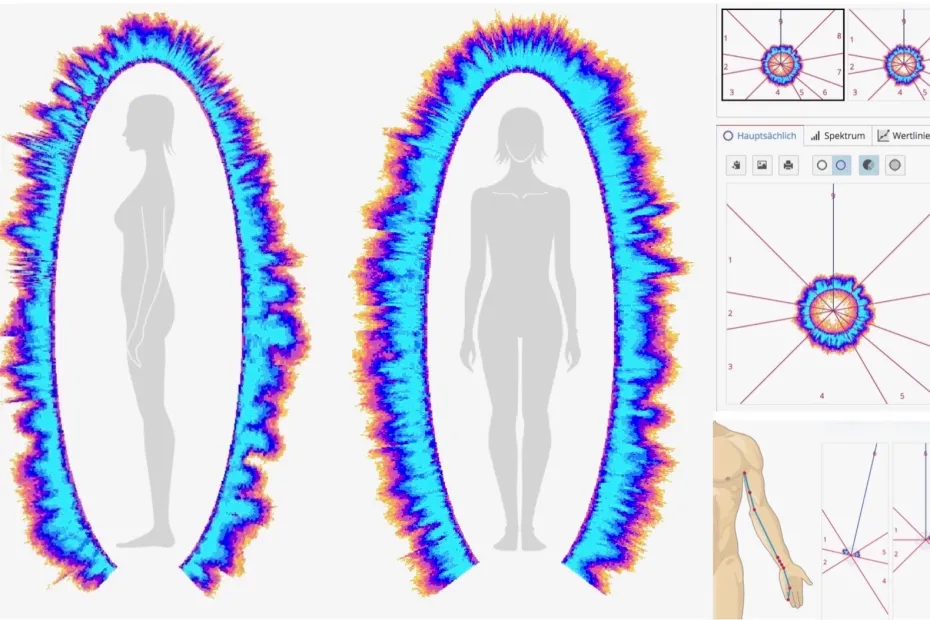
Advanced measurement devices now enable precise detection of biofield emissions. The SQUID magnetometer stands as the most sensitive instrument, capable of detecting minute biomagnetic fields generated by physiological activities. The Gas Discharge Visualization (GDV) Camera captures digital images of energy fields through high-intensity electromagnetic stimulation of fingertips, providing detailed analysis of individual energy patterns.
Key measurement technologies include:
- Electrocardiogram (ECG) for heart-generated fields
- Electroencephalogram (EEG) for brain-wave patterns
- Biofield detection devices for overall energy assessment
- Electromagnetic field sensors for cellular emissions
Research Studies and Findings
Scientific research has documented significant discoveries about human energy fields. Studies using the GDV Camera have demonstrated repeatable, reproducible results in measuring energy emissions. The electromagnetic field generated by the human heart registers 2.5 watts of power, producing 40-60 times more electrical activity than the brain.
| Measurement Type | Findings |
|---|---|
| Cellular Fields | Detected at molecular level |
| Heart Field | Measurable up to several feet away |
| Brain Waves | Frequencies between 0.3-30 Hz |
| Biophoton Emissions | Ultra-weak light emissions |
Measurement Challenges and Solutions
Despite technological advances, measuring human energy fields presents unique challenges. The primary difficulty lies in detecting extremely weak signals amid environmental electromagnetic noise. Scientists have developed sophisticated solutions, including:
The development of shielded environments for accurate measurements has significantly improved detection capabilities. Advanced software algorithms now help filter out background noise, enabling clearer signal detection. Researchers have also established standardized protocols for measurement procedures, ensuring consistency across different studies.
Recent innovations in quantum sensors and biofield detection technologies continue to enhance measurement precision. These developments provide increasingly reliable data about the nature and behavior of human energy fields, supporting both diagnostic and therapeutic applications.
Electromagnetic Properties
The electromagnetic properties of human energy fields emerge from complex cellular and molecular interactions within living tissues. These fields represent measurable energy patterns that influence biological processes at multiple levels of organization.
Cellular Electric Fields
Cellular membranes generate electric fields through the movement of ions across specialized channels. These transmembrane potentials create oscillating fields with frequencies ranging from 0-300 Hz. Electric fields exert significant influence on cellular functions through:
- Regulation of ion channel activity
- Modification of membrane transport mechanisms
- Alteration of cellular signaling pathways
- Control of protein activation patterns
The strength of cellular electric fields varies depending on tissue type and physiological state:
| Tissue Type | Field Strength (mV/mm) |
|---|---|
| Nerve Tissue | 70-100 |
| Muscle Cells | 50-80 |
| Skin Surface | 10-30 |
| Internal Organs | 20-40 |
Biomagnetic Field Patterns
Human tissues generate distinct biomagnetic field patterns that can be detected and measured. The strongest biomagnetic emissions originate from cardiac and neural tissues. The heart produces magnetic fields measuring 50-100 picotesla, while brain activity generates fields in the femtotesla range. These biomagnetic patterns demonstrate remarkable coherence and can extend several feet beyond the body’s surface.
The biofield detection technologies reveal that these magnetic patterns reflect both cellular activity and larger-scale physiological processes. Magnetic field measurements provide valuable insights into organ function and overall health status.
Field Interactions and Effects
The interaction between electromagnetic fields and biological systems occurs through multiple mechanisms. These interactions produce both thermal and non-thermal effects on tissues. Non-thermal effects include alterations in:
The primary mechanism involves the generation of reactive oxygen species (ROS) in cellular environments. EMF exposure influences cellular functions through modification of ion channel activity and membrane transport processes. These changes can affect enzyme activity, gene expression, and protein synthesis.
Field interactions demonstrate frequency-dependent effects, with different frequencies targeting specific biological processes. Low-frequency fields (0-300 Hz) primarily affect membrane properties and ion transport, while higher frequencies can influence molecular structures and cellular signaling pathways.
Research indicates that electromagnetic field interactions play crucial roles in:
- Cellular communication networks
- Tissue repair mechanisms
- Metabolic regulation
- Neural signal transmission
The strength of these interactions depends on field intensity, exposure duration, and tissue characteristics. Modern research continues to uncover new aspects of these complex electromagnetic relationships within living systems.
Biological Implications
Recent scientific research reveals profound connections between human energy fields and biological processes at multiple levels. These interactions shape cellular behavior, influence health outcomes, and offer promising therapeutic applications.
Impact on Cellular Function
The human energy field directly influences cellular activities through electromagnetic interactions. These fields affect voltage-gated ion channels, membrane transport mechanisms, and cellular signaling pathways. Research demonstrates that cellular exposure to electromagnetic fields triggers several responses:
- Altered protein phosphorylation patterns
- Changes in ATP synthesis and energy metabolism
- Modifications in cell membrane structure
- Shifts in genetic expression profiles
- Variations in enzyme activity levels
Role in Health and Disease
Energy field disturbances can significantly impact health through oxidative stress mechanisms. When electromagnetic fields disrupt cellular functions, they may trigger the production of reactive oxygen species (ROS), leading to cellular damage. This oxidative stress can affect multiple biological systems, potentially contributing to various health conditions.
The relationship between energy fields and health manifests through several pathways:
- Cellular stress responses and adaptation
- Alterations in immune system function
- Changes in hormone production
- Modifications in neural signaling
- Impacts on tissue repair mechanisms
Therapeutic Applications
Biofield therapies harness the properties of human energy fields for healing purposes. These approaches aim to restore balance and promote natural healing processes. Current research supports their application in various conditions:
| Therapeutic Approach | Applications | Reported Benefits |
|---|---|---|
| Energy Healing | Pain Management | Reduced inflammation |
| Biofield Therapy | Stress Reduction | Improved immune function |
| Electromagnetic Treatment | Tissue Repair | Enhanced healing rates |
| Field-Based Interventions | Mental Health | Decreased anxiety levels |
Scientific evidence indicates that these therapies can stimulate healing responses by affecting the body’s subtle energy fields. Research shows particular promise in:
- Managing chronic pain conditions
- Supporting immune system function
- Reducing inflammation markers
- Accelerating wound healing
- Improving mental health outcomes
Modern measurement technologies now enable practitioners to monitor therapeutic outcomes through biofield detection devices, providing objective data on treatment effectiveness. These advances have helped establish biofield therapies as complementary approaches in healthcare settings, though researchers emphasize the need for continued scientific validation.
The integration of energy field concepts into medical practice represents a growing recognition of the complex relationships between electromagnetic phenomena and biological systems. As measurement technologies advance and research expands, our understanding of these interactions continues to deepen, opening new possibilities for health optimization and disease treatment.
Future Research Directions
Technological advancement stands at the forefront of human energy field research, promising breakthrough discoveries in measurement, analysis, and therapeutic applications. The convergence of artificial intelligence, quantum sensors, and biofield detection technologies opens new frontiers in understanding these complex energy systems.
Emerging Technologies
Advanced measurement systems are revolutionizing our ability to detect and analyze human energy fields. Artificial Intelligence plays a crucial role through predictive analytics algorithms that can forecast and interpret field patterns with unprecedented accuracy. Smart sensor technologies enable real-time monitoring of biofield variations, while quantum detection systems offer increasingly precise measurements.
| Technology Category | Applications | Impact |
|---|---|---|
| AI Analytics | Field pattern recognition | Enhanced diagnostic accuracy |
| Smart Sensors | Real-time monitoring | Improved treatment tracking |
| Quantum Detectors | Subtle energy measurement | Greater precision in analysis |
| Integration Systems | Data correlation | Comprehensive health assessment |
These technological innovations facilitate the development of more sophisticated diagnostic tools that can detect energy field disturbances before they manifest as physical symptoms.
Current Research Gaps
Despite significant advances, several critical areas require further investigation:
- Integration of electromagnetic and biochemical approaches in Western medicine
- Development of standardized measurement protocols for biofield detection
- Understanding the relationship between environmental factors and human energy fields
- Validation of therapeutic applications through controlled studies
- Creation of reliable diagnostic tools for energy field assessment
The primary challenge lies in bridging the gap between traditional energy-based healing approaches and modern medical practices. Research indicates that when information exchange between cellular systems breaks down, electromagnetic interventions may offer efficient pathways to restore health.
Potential Applications
The future of human energy field research holds promising applications across multiple domains. Preventive healthcare stands to benefit significantly from advanced field measurement technologies. These systems could detect energetic imbalances before they manifest as physical ailments, enabling early intervention.
The integration of emerging technologies with traditional healing practices creates new possibilities for healthcare:
- Diagnostic Applications
- Early disease detection through field pattern analysis
- Non-invasive health monitoring systems
- Personalized treatment planning based on energy patterns
- Therapeutic Developments
- Targeted electromagnetic therapies
- Energy field optimization techniques
- Integration with conventional medical treatments
- Environmental Considerations
- Assessment of electromagnetic pollution effects
- Development of protective technologies
- Creation of healing environments
Research institutions are establishing internship programs in medical schools to bridge the gap between conventional and energy-based approaches. This integration aims to create a more comprehensive healthcare system that addresses both physical and energetic aspects of human health.
The development of sophisticated measurement devices remains a primary focus, with potential applications in diagnosis similar to current imaging technologies like X-rays and MRI scans. These advances could revolutionize preventive healthcare by detecting energetic disturbances before they manifest as physical symptoms.
Environmental factors increasingly influence human energy field research, particularly regarding the effects of modern technology. Studies examine the impact of power lines, wireless devices, and other electromagnetic sources on human energy fields, leading to the development of protective measures and optimization strategies.
Conclusion
Human energy fields represent a fascinating intersection of ancient wisdom and modern scientific discovery. Research has validated the existence of these complex electromagnetic patterns through advanced measurement technologies and rigorous scientific studies. Scientists now understand these fields as integral components of biological processes, influencing everything from cellular function to overall health outcomes.
The measurement and analysis of human energy fields continue to advance through quantum sensors, AI-powered detection systems, and sophisticated biofield technologies. These developments create new possibilities for both diagnostic and therapeutic applications in healthcare. Medical practitioners increasingly recognize the value of energy field assessment as a complementary approach to traditional diagnostic methods.
Research demonstrates that human energy fields play essential roles in maintaining health, supporting cellular communication, and regulating biological processes. The growing body of scientific evidence points toward a future where energy field analysis becomes a standard component of medical practice, offering new paths for early disease detection and personalized treatment strategies.
Scientists and healthcare providers now work toward a comprehensive understanding of human energy fields, their properties, and their applications in medicine. This evolving knowledge promises to enhance our ability to maintain health and treat disease through targeted interventions based on energy field patterns.

SEO Company and Digital Marketing Agency Maxsdigit, Mumbai, India